Emotional Architecture Is Measured in Nearness
A person entering a room often adjusts before thinking. The hand slows on the door handle, the step shortens near a table, the eyes move toward the lighter wall and then away from it. These small corrections are rarely noticed, yet they decide whether the room feels available or resistant.
This is the ground of emotional architecture. It is not feeling added after a plan has been drawn. It is the way proportion, light and distance make the body understand a place before language arrives.
A room is felt before it is named
The first reading of an interior is physical. A ceiling may be generous, but if every object sits too far from the surfaces around it, the room can feel unresolved. A corner may be small, but if the chair, wall and source of light share a believable scale, it can become settled. The emotion comes from spatial perception, not from ornament alone.
Architecture and emotion meet in modest negotiations. The eye measures gaps; the body senses whether a passage is compressed or calm enough to cross without attention. Light can lengthen perceived depth, while a dark surface can bring the boundary forward.
Proportion sets the emotional temperature
Interior atmosphere is often discussed as if it belonged to finishes or softness. In practice, it begins with proportion: the height of a luminous surface, the untouched wall beside a cabinet, a vertical object against a corner.
Light perception sharpens those proportions. A bright point placed too high can detach itself from the life of the room. A low glow without surrounding darkness can flatten furniture into one layer. The question is not only how much light is present, but where the eye is allowed to pause.
Shadow gives light a human scale
Emotional lighting depends on what remains outside full visibility. Shadow is not a failure of illumination; it lets illumination have measure. The edge between a lit wall and a darker plane tells the body how far the room extends and where attention may rest.
This is why good lighting cannot be separated from restraint. The journal essay Why Good Lighting Needs Shadows develops this directly: a room that shows everything at once gives the inhabitant little work to do, and little space in which to settle perception.
A vertical object can test the room
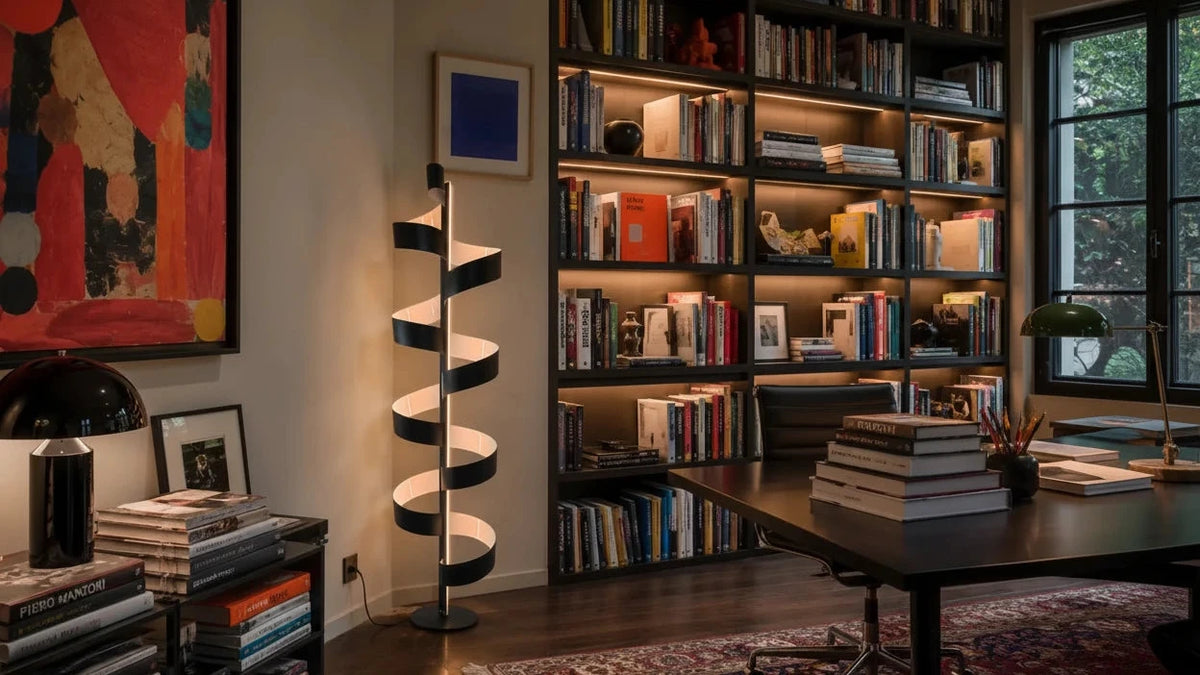
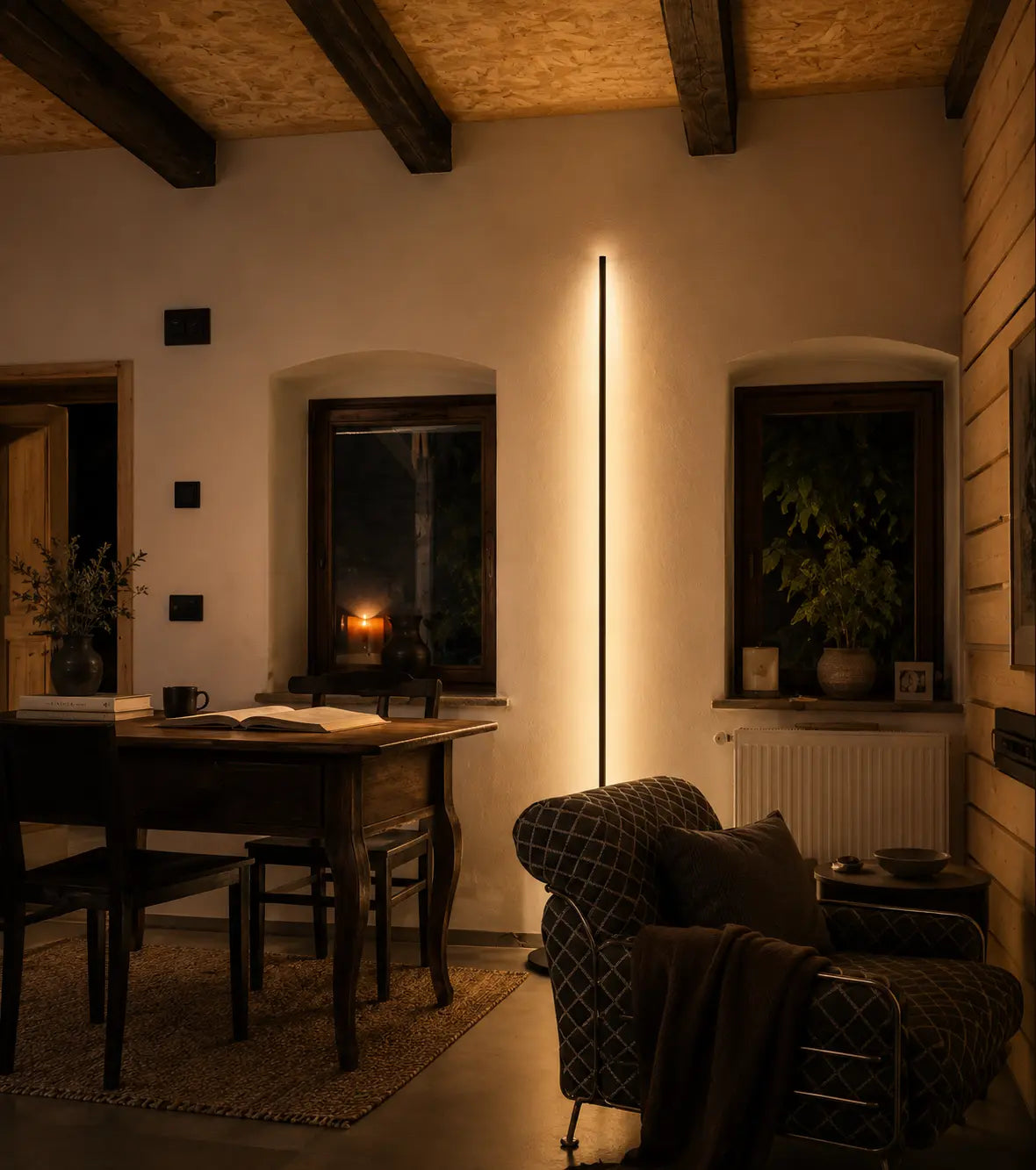
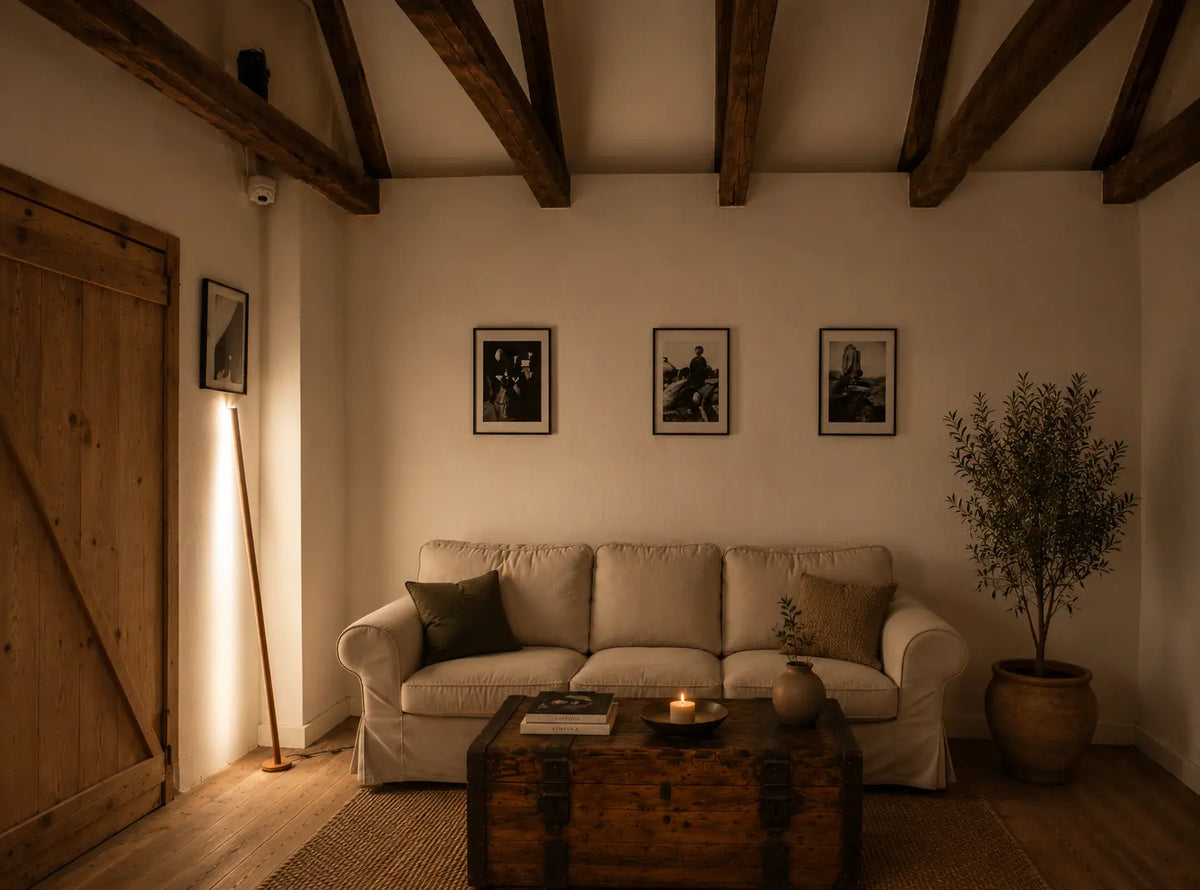
Only after these relationships are understood does an object become meaningful. The Gica Contra Floor Lamp 195 can be read as a slender vertical presence beside the larger planes of the room. Its restraint matters because it introduces a precise line without asking the interior to become a display around it.
Near a wall, a reading corner or an open passage, it makes proportion visible because any error of distance becomes apparent. For a practical continuation of this question, CristofaroLuce’s guide to choosing the right sculptural floor lamp for a space considers scale without separating the object from its architecture.
The lasting impression is often peripheral
The emotional memory of a room is seldom held by its most obvious feature. It may remain in a softened edge, the height at which light stops, or the adjustment a person makes when crossing between areas. Emotional architecture is built from those intervals.