Emotional Architecture and the Measure of a Room
A room can feel unsettled even when nothing in it is disorderly. The sofa is aligned, the rug is centered, the wall is clean. Yet a far corner may remain visually heavy, or the ceiling may seem lower than its measured height, because the eye has no clear passage from one surface to another. The discomfort is in the way distances are perceived.
This is where emotional architecture begins to matter: not as a mood applied to a room, but as the consequence of proportion, light and shadow acting on the body before thought catches up. A person entering such a space does not calculate wall planes. They pause, turn slightly, choose where to sit, or avoid the darker edge without knowing why.
Proportion Is Felt Before It Is Named
Interior atmosphere is often discussed through materials and colour, but proportion has a quieter authority. A tall empty wall beside low furniture can leave the upper part of the room unclaimed. A narrow passage between an armchair and a side table can make movement feel negotiated. A bright surface beside an unconsidered dark one can compress a corner.
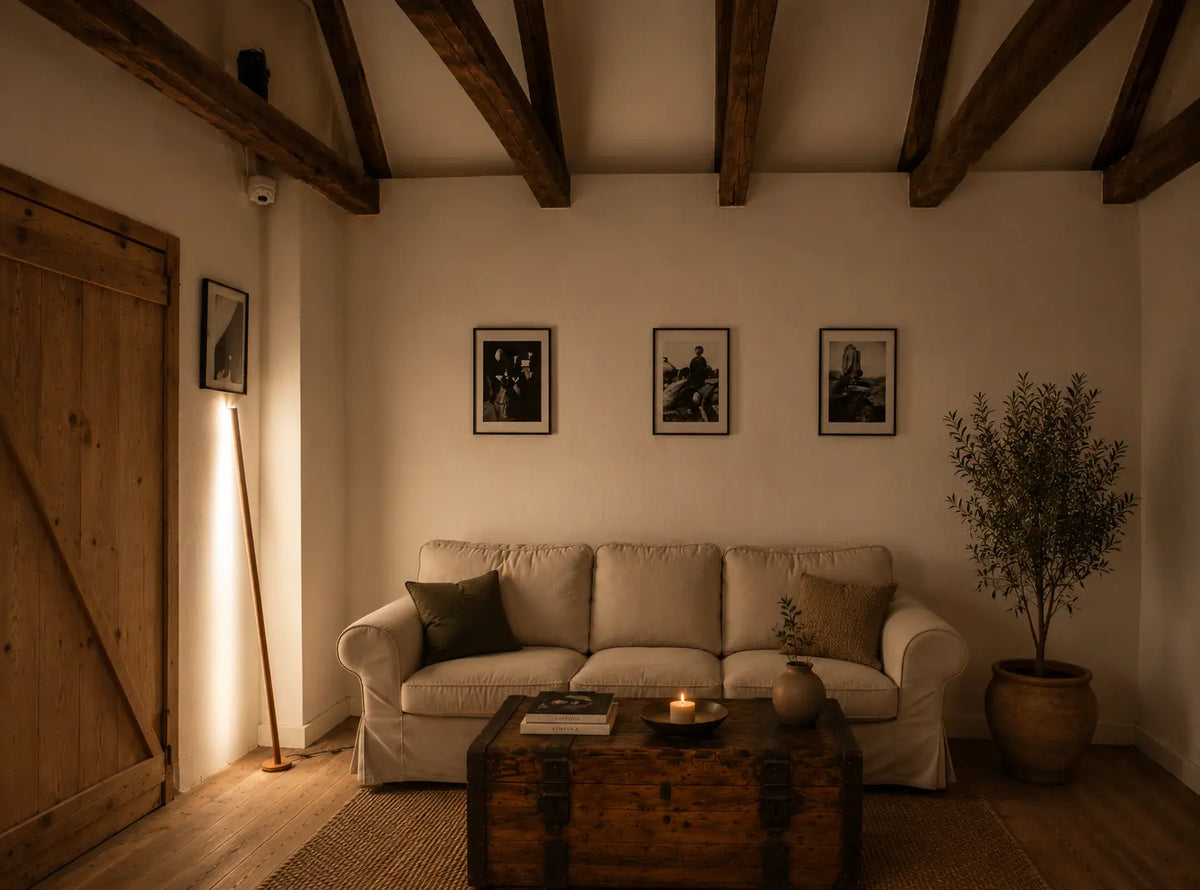
These effects are emotional because they are spatial first. The body reads height, nearness, weight and openness with particular speed. A ceiling line, a vertical object, or a wash of light along a wall can give the eye a scale against which the rest of the room can be understood.
For a broader consideration of proportion and placement, the atelier’s guide to choosing a sculptural floor lamp for a space is useful. Here, the question is narrower: how a room becomes emotionally intelligible.
Light Alters the Distance Between Things
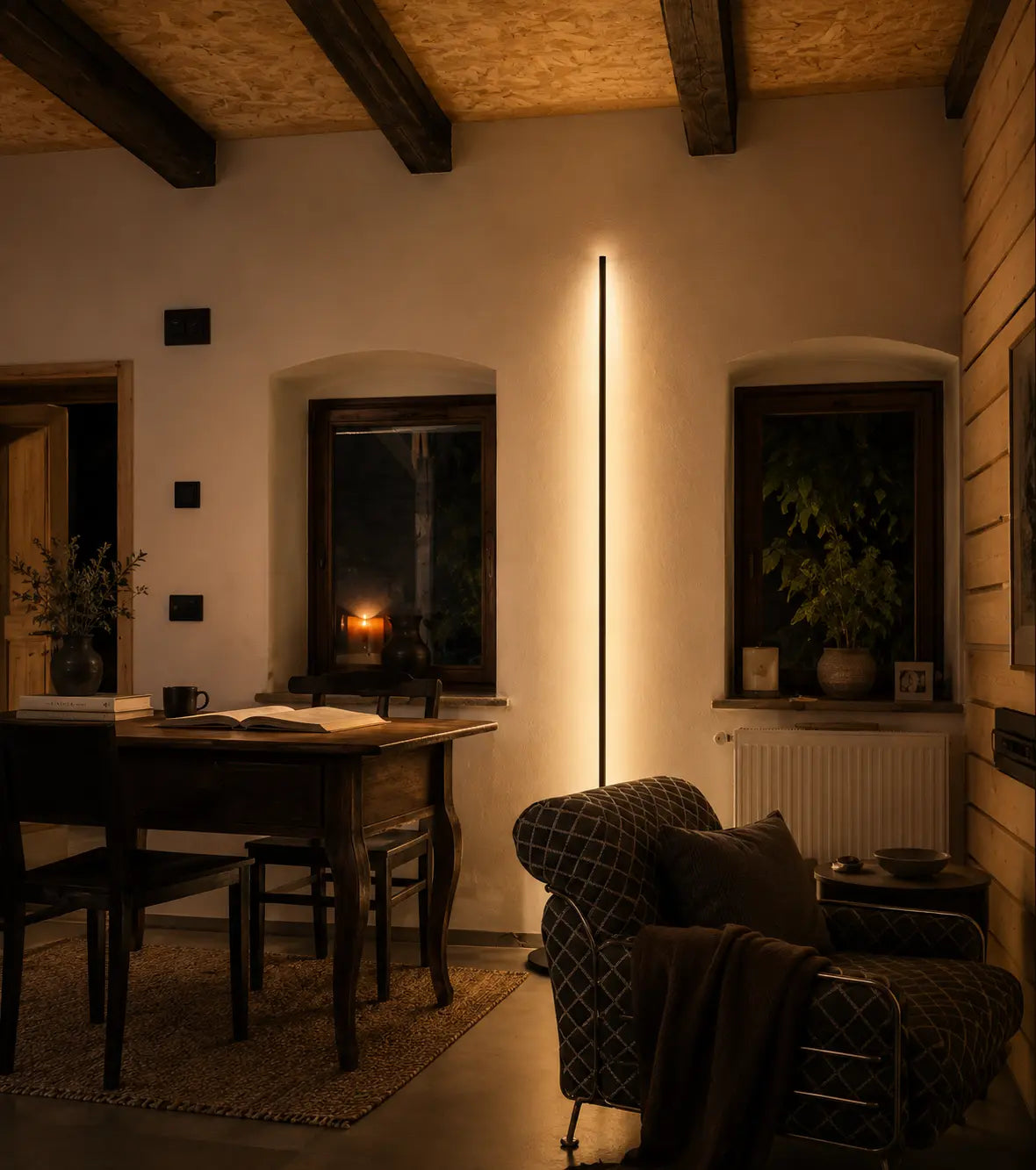
Light perception is rarely neutral. When the brightest point in a room is a bare source, attention gathers there and the surrounding architecture may become secondary. When illumination meets a surface, the wall is no longer background only; its texture, colour and distance affect how the room is understood.
Shadow is not the opposite of this effect. It gives the illuminated plane an edge. Without a darker adjacent area, light can flatten rather than reveal. Good emotional lighting depends less on general brightness than on the transition between what is shown and what is left quieter.
The journal has addressed this relation directly in Why Good Lighting Needs Shadows. In the present context, shadow helps the room keep its depth, where architecture and emotion quietly meet.
When an Object Gives Scale to Feeling
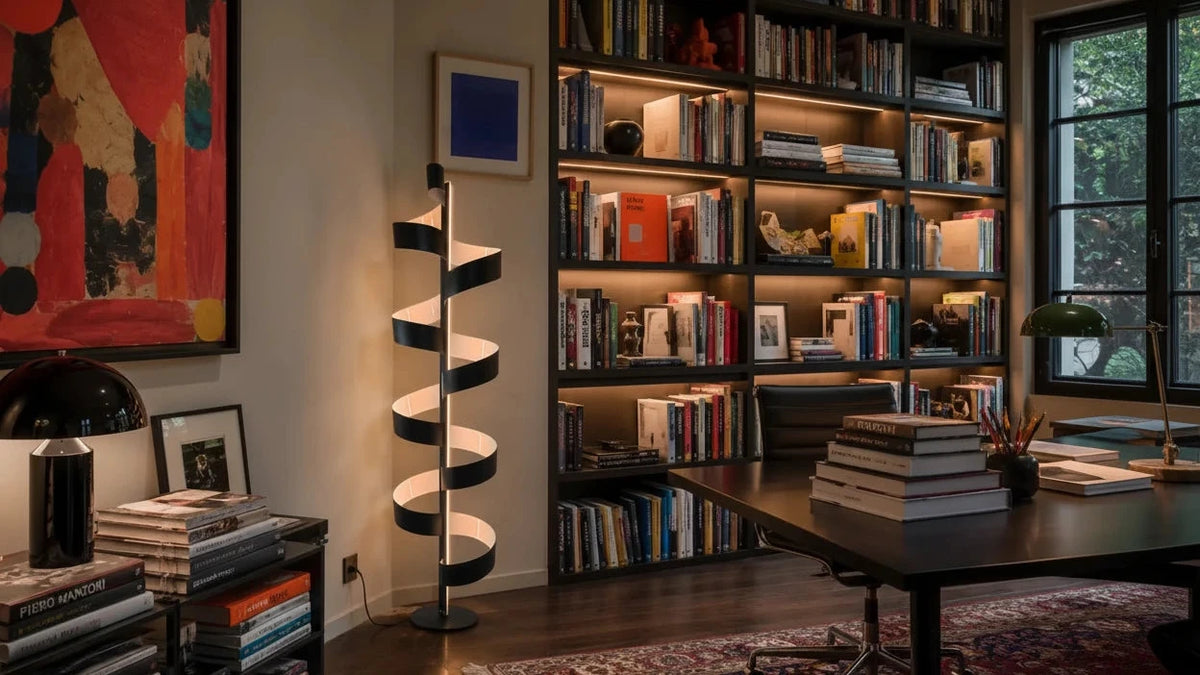
Only after these relationships are understood can an object be judged properly. The Gica Contra Floor Lamp 195 enters this discussion not as a decorative conclusion, but as a measure placed into space. Its vertical presence can register against a wall, a ceiling height, or the emptiness beside furniture without needing visual excess.
Return to the unsettled room. The solution may not be to add more objects, stronger colour or brighter light. It may be to give the eye one proportion it can trust, and to let illumination and shadow clarify the surfaces around it. Emotional architecture is often made at that scale: where a physical relationship becomes clear enough for the body to stop negotiating the room.