The Scale of Intention: From Notebook to the Realized Interval
An idea often begins in the margins. On the pages of an old notebook, a sketch is not yet an object; it is a notation of pressure, a quick trajectory of ink that attempts to lock a proportion before it escapes. It lacks weight, thickness, and resistance. It exists purely as potential, clean and uninterrupted by the physics of a room.
The transition from the page to the bench of the atelier is a shift in discipline. In the studio, the loose gesture of the hand must confront the exactitude of joinery and the stubborn nature of material. Here, the task is not to amplify the original sketch, but to reduce it to its necessary elements. We analyze the structural junctions, refine the tolerances, and question every millimeter. In this patient development, every small irregularity is not a flaw, but the trace of the hand that created it, a mark of authenticity and soul. The goal is a specific kind of clarity: making a complex balance reproducible on a deliberate scale.
Commitment to constraint determines the nature of this process. These objects do not belong to the logic of industrial repetition. A series is capped strictly at five hundred pieces, a boundary that alters how each unit is approached. When production is finite, every piece retains the memory of the hand that measured its spine, ensuring that the precision achieved in the first prototype remains uncompromised in the final iteration of the series.
The Division of the Plane: 2700K and the Weight of Shadow
Once these structural elements are evaluated and the raw prototype is ready, the mind turns to its potential insertion within different contexts. It is a return to the origin: with the help of a pencil, always on the pages of the same old notebook, I sketch to imagine the lamp inside various spaces, different corners, shifting atmospheres. One does not merely study the object; one traces the trajectory of the light it produces.
In these compositions, light is only half of the conversation. Shadow is not an accidental absence, nor is it a dark corner to be eliminated by force. It occupies precisely half of the final experience—a deliberate fifty percent of the volume. Without this darker weight, the illumination loses its boundary, flattening the very contours we spent weeks refining on the workbench. The shadow provides the mass; the light provides the interval.
Within this balance, the quality of the warmth remains an unalterable coordinate at 2700K. This point is not chosen for variety; it represents an exact domestic equilibrium for a pleasant and relaxing ambient light. It is a frequency that does not demand attention or mimic the clinical sharpness of the daytime. It allows the grain of the material and the surfaces of the room to settle into a relaxed, composed state.
The Settled Sign
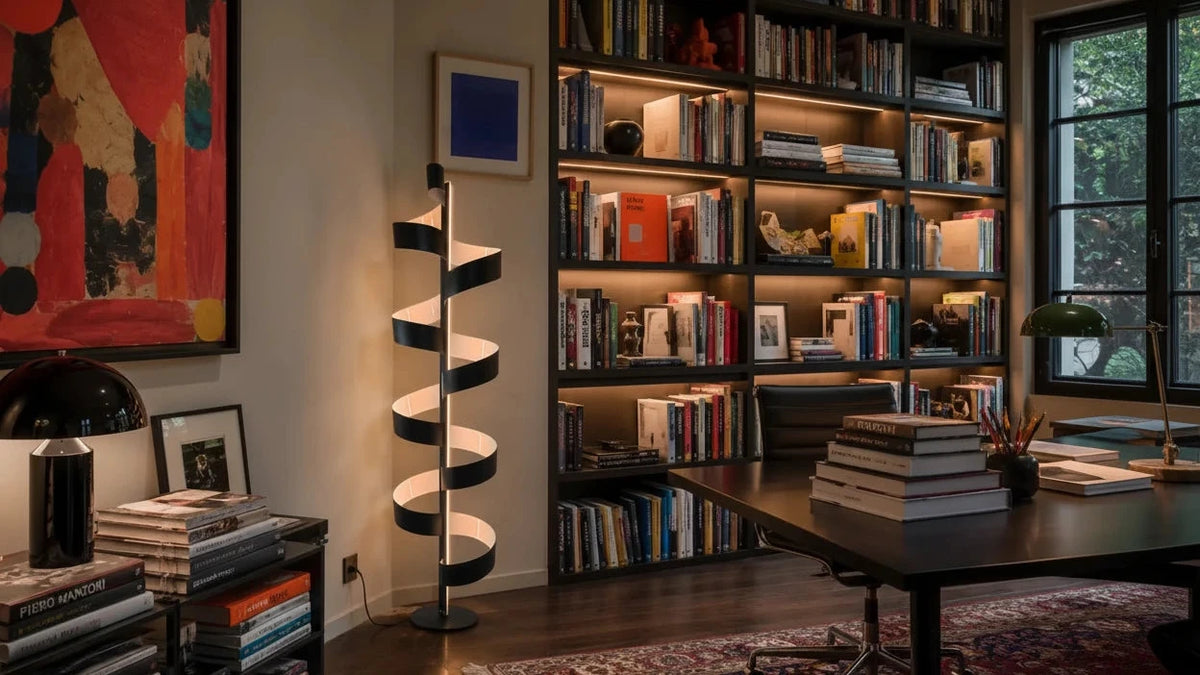
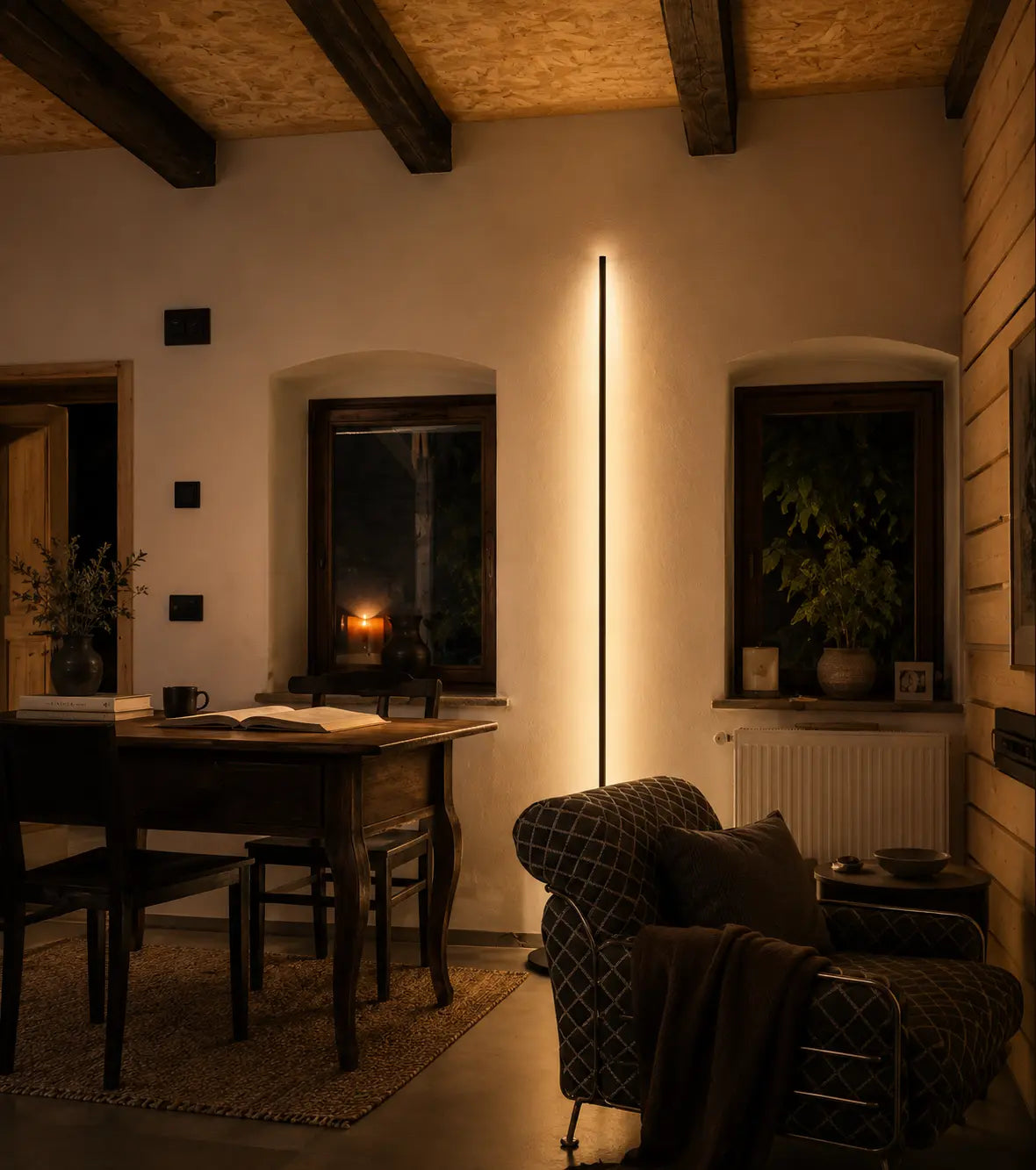
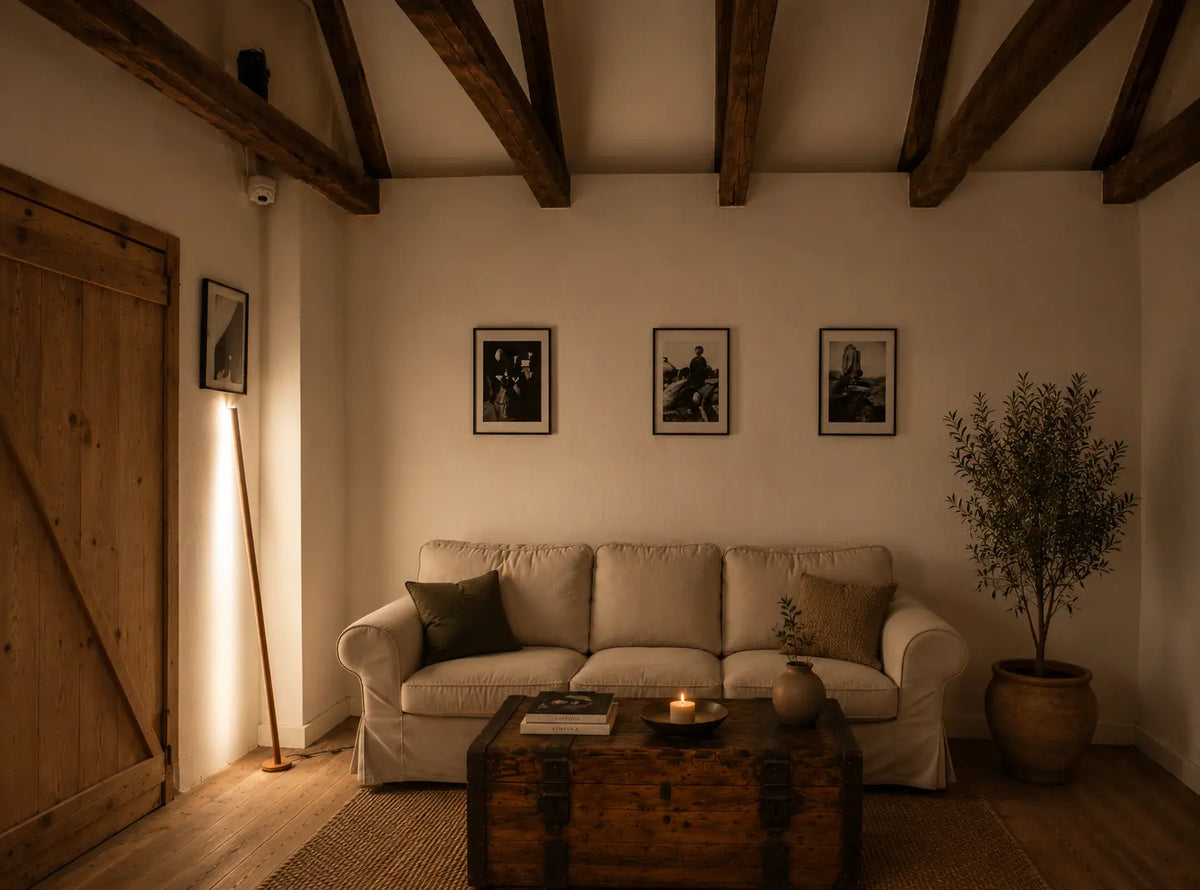
The final stage consists of the complete finishing of the prototype, followed by a photoshoot in my small studio. There, through the lens, we verify whether the proportions hypothesized on paper and shaped in the material endure the test of real light.
The object does not perform. It marks a boundary, holds its half of the shadow, and introduces 2700K of controlled calm to the plane. The workshop falls quiet, the tools are returned to their racks, and the sketch on the page is finally realized as a legible measure.