Calm Interiors Begin Where the Light Lands
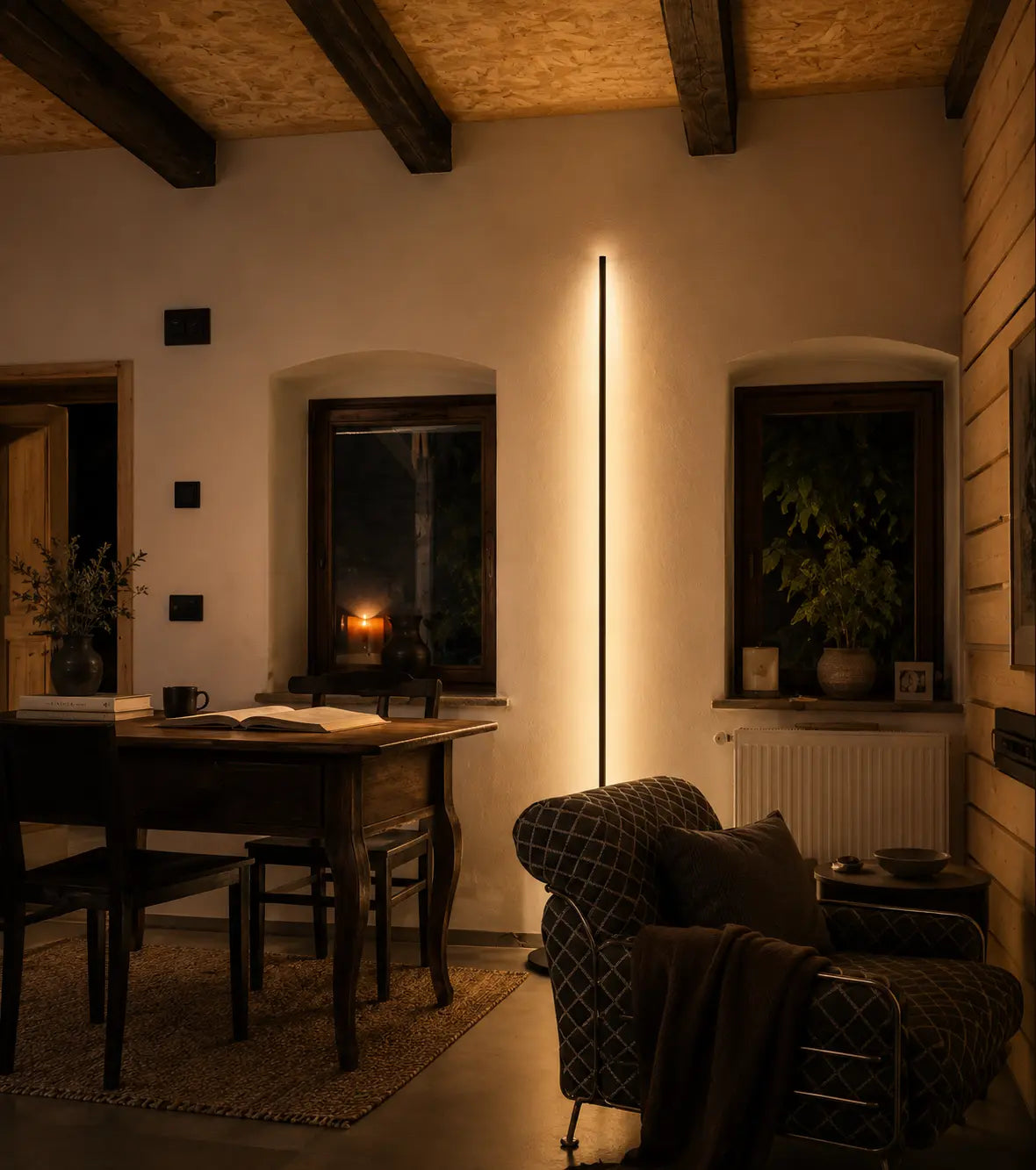
The edge of a plaster wall can feel hard under a ceiling light and generous under a small source placed lower in the room. The material has not changed. What changes is the angle of attention: the eye stops confronting brightness and begins reading the surface.
Calm interiors are often described through muted colours, spare furniture or natural materials. Those choices matter, but they cannot carry the whole experience. A room made for rest or concentration depends on how visual energy is distributed. If every object is equally visible, the space remains active even when it is quiet.
Brightness Is Not the Same as Rest
A low level of light can still be tiring if the source is exposed, misplaced or too high in the field of view. Rest begins when light is allowed to arrive indirectly, after meeting a wall, shelf or vertical plane. The surface becomes legible without insisting on itself, and shadow is left to give proportion back to the room.
This is the useful distinction behind warm indirect light: it is not warmer because it is sentimental, but because it reduces the number of sharp visual events. For a related reading of reflected illumination at room scale, the journal essay on indirect light follows the subject through larger architectural examples.
The Wall Becomes Part of the Setting
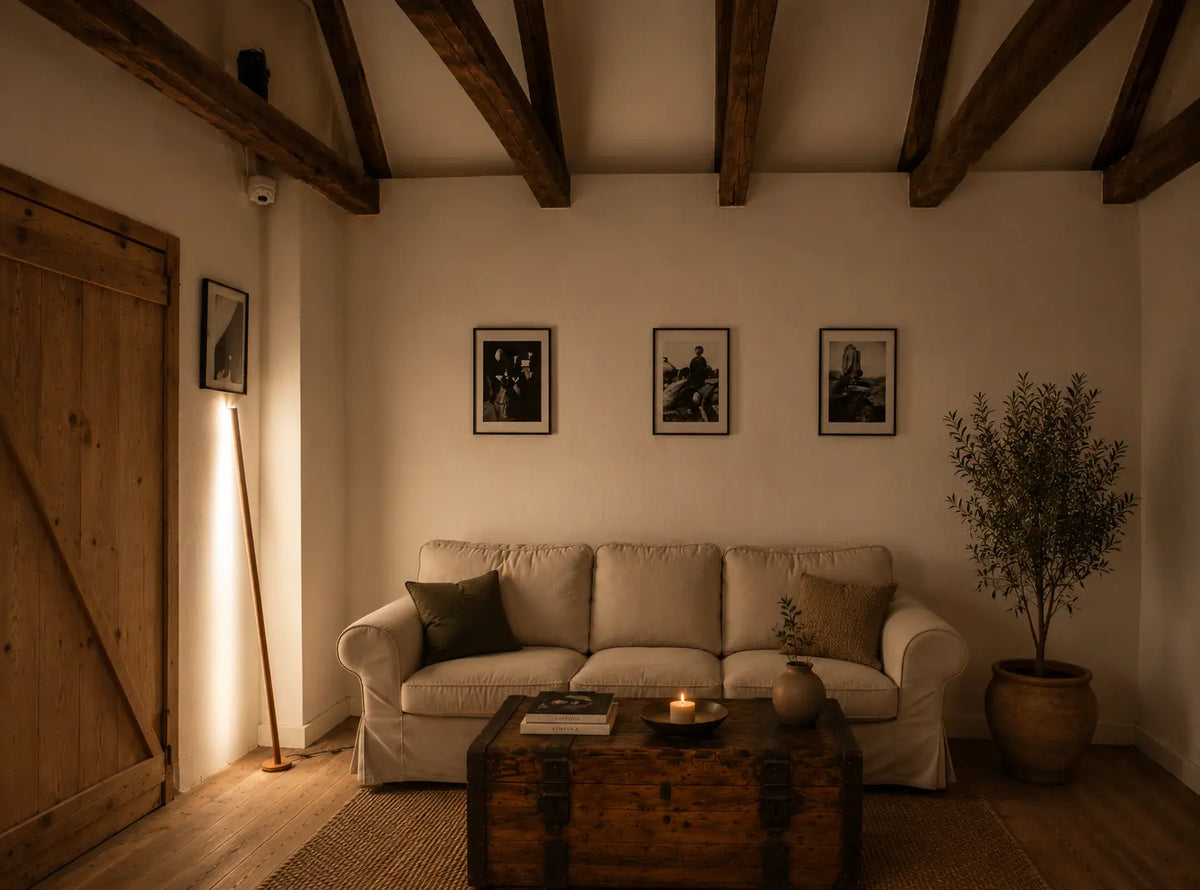
Position matters more than abundance. A small source set near a wall can do more for a peaceful home than a brighter fitting placed without regard for surfaces. The important area is often not the object itself, but the transition beside it: where the lit plane falls away into a quieter edge.
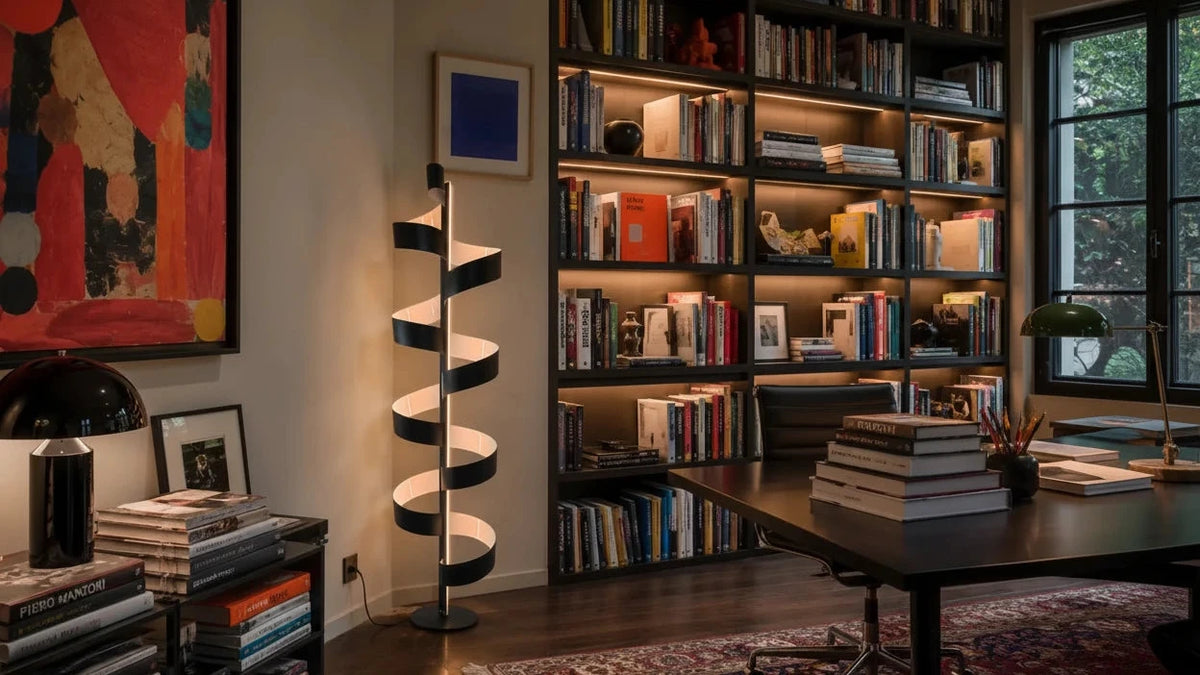
For larger rooms where the same calm depends on a vertical presence, the guide to choosing the right sculptural floor lamp considers scale, placement and proportion in relation to the surrounding space.
On a desk, shelf or bedside, the Tratto table lamp — Minimalist Sculptural Light makes this principle concrete: the surrounding wall is part of the lighting composition. Its two offset diffusers direct warm reflected light toward the wall, and the 2700 K tone belongs to intimate evening use rather than the imitation of daylight. Each piece is handmade in Europe, so small variations may remain as subtle traces of the hand that made it.
Calm Needs Unequal Attention
Soft ambient lighting is most convincing when it accepts hierarchy. A reading corner may need a concentrated pool on the page, while the wall behind it asks only for a slow gradient. A bedroom can keep the bedside useful and let the far corner remain partly withdrawn. Calm interiors are not blank; they are edited in degrees of visibility.
What the Body Remembers
The practical test is simple. After an hour in the room, the eye should not remember glare or restless contrast between surfaces. It should remember where to sit, where to read, where to stop looking. The most relaxing lighting leaves a room usable while allowing parts of it to recede. That retreat is often what makes a space feel available.