Once the Window Goes Dark, Light Has to Change Its Position
When the window stops lighting a room, where should the light come from instead? The usual answer concerns quantity: replace the fading daylight with enough fittings to keep reading and moving about. The more useful answer concerns position. A room is organised by the direction its light arrives from, and a daily lighting rhythm depends on that direction changing as the hours do.
The window sets the room's direction
In daylight, most rooms have a front and a back. Furniture casts shadows pointing away from the glass, and people settle beside the window almost without deciding to. A desk drifts toward it. A reading chair turns a few degrees to catch it. Light throughout the day rises, lengthens and cools, but its origin stays fixed on one side.
At dusk that origin disappears. The glass turns dark, then reflective, and the room loses the orientation it has carried since morning.
A ceiling cannot replace a window
The common reflex is an overhead fitting. It restores visibility, but from the wrong place. Light from the centre of the ceiling has no side, so shadows fall straight beneath tables, faces are lit from above and every wall receives the same treatment. The room becomes legible again while leaning toward nothing. Dimming the fitting only produces a darker version of the same evenness. Evening lighting usually fails less from excess brightness than from a lack of direction, as if the day had simply continued with its structure removed.
Light brought down to the height of the body
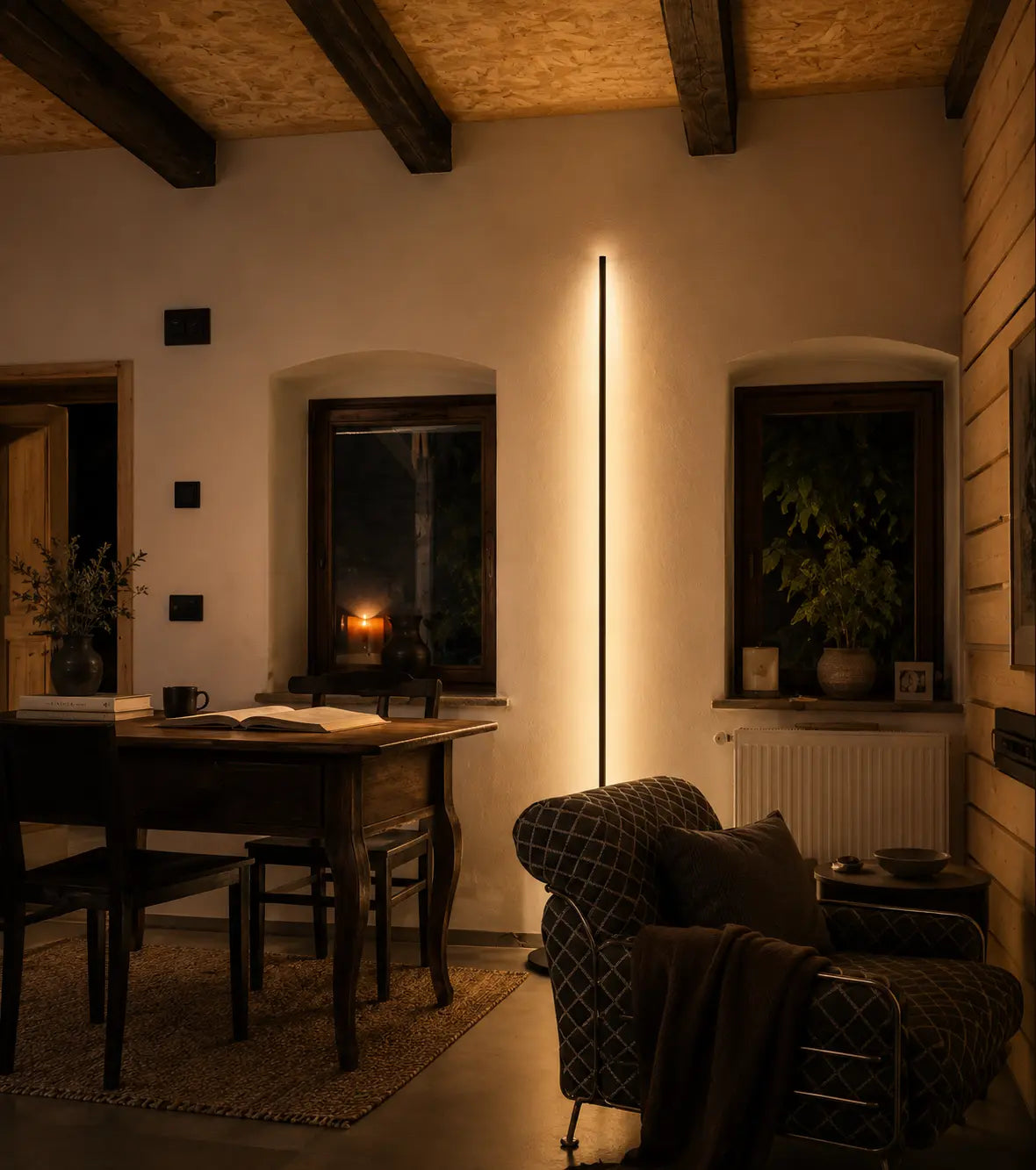
After dark, the useful centre of a room is rarely its geometric middle. It is the armchair, the end of the sofa, the corner where someone reads before bed. Bringing light down to stand near these places changes the proportion of what is lit. The ceiling falls back into darkness, the upper walls recede, and the illuminated volume shrinks toward the scale of a seated person. That contraction, more than any reduction in brightness, is what separates an evening from an afternoon.
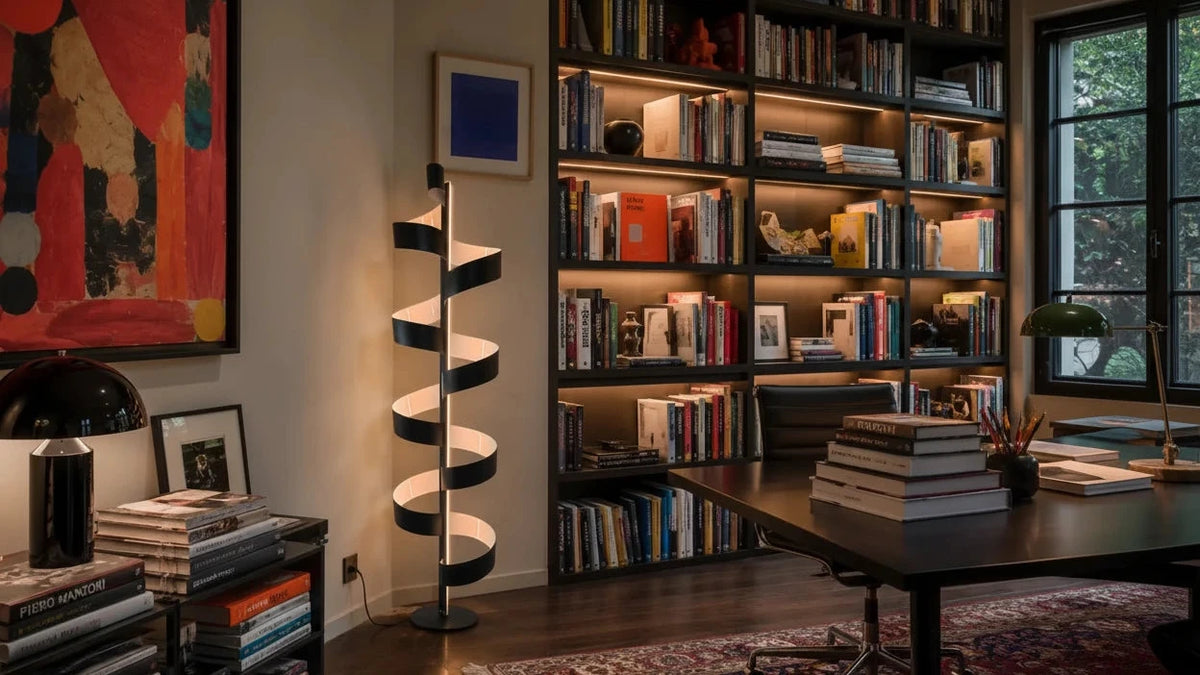
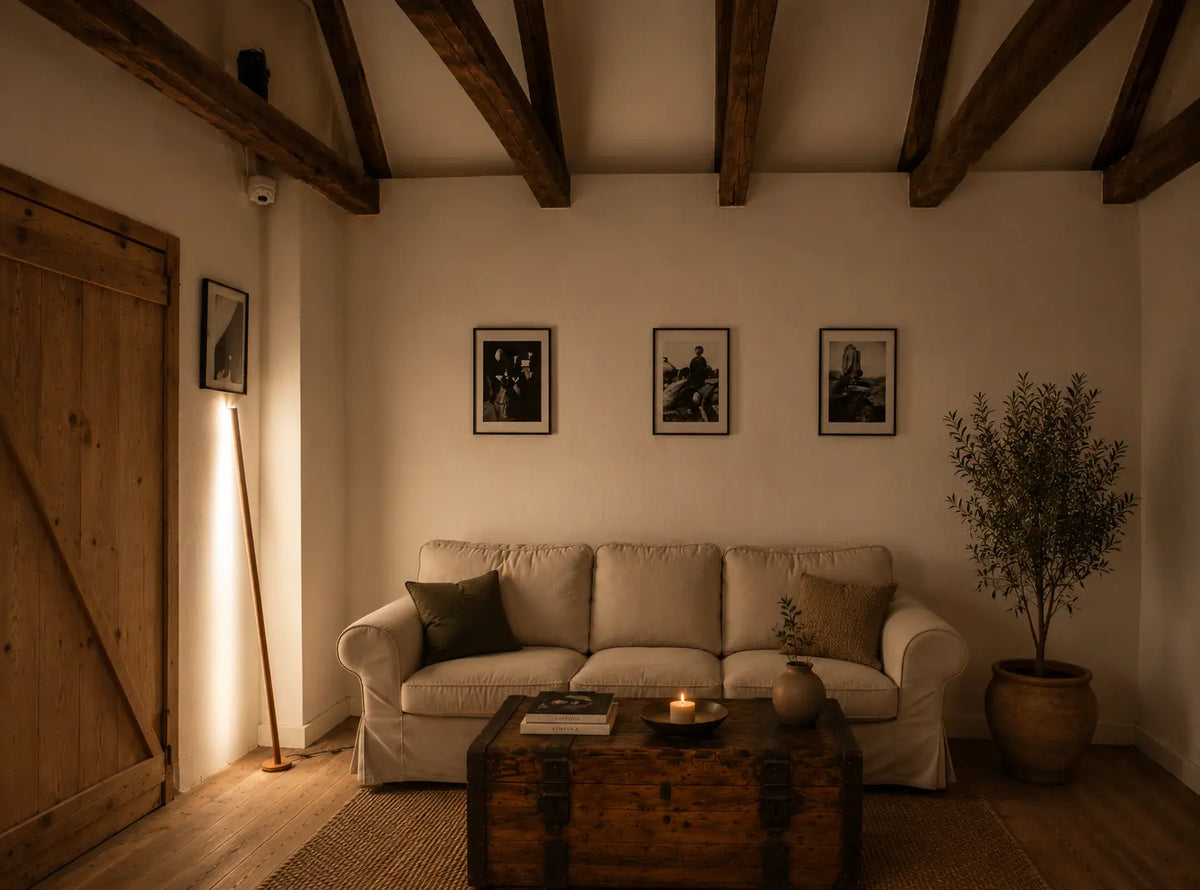
Height therefore becomes the decisive measure. Gica Contra Floor Lamp 150 rises to 1500 mm, well below the ceiling and close to the eye level of someone seated or standing, and gives a warm 2700 K light. Set beside a chair rather than in open floor, an object of that height marks where the evening is spent without asking for the whole room to be lit. Matching such an object to a particular room is a question of scale and placement, which our guide on how to choose the right sculptural floor lamp for your space sets out in more detail. The journal has already considered how light can follow the pace of a room through intensity; position is the other half of the same lighting routine.
The principle is simple to apply. By day, let the window decide where light comes from. By night, decide it deliberately: before choosing how bright the evening should be, choose where its light should stand, and keep it at the height of the people who will use it.