Why Every Aluminium Profile Is Levelled Before the First Cut
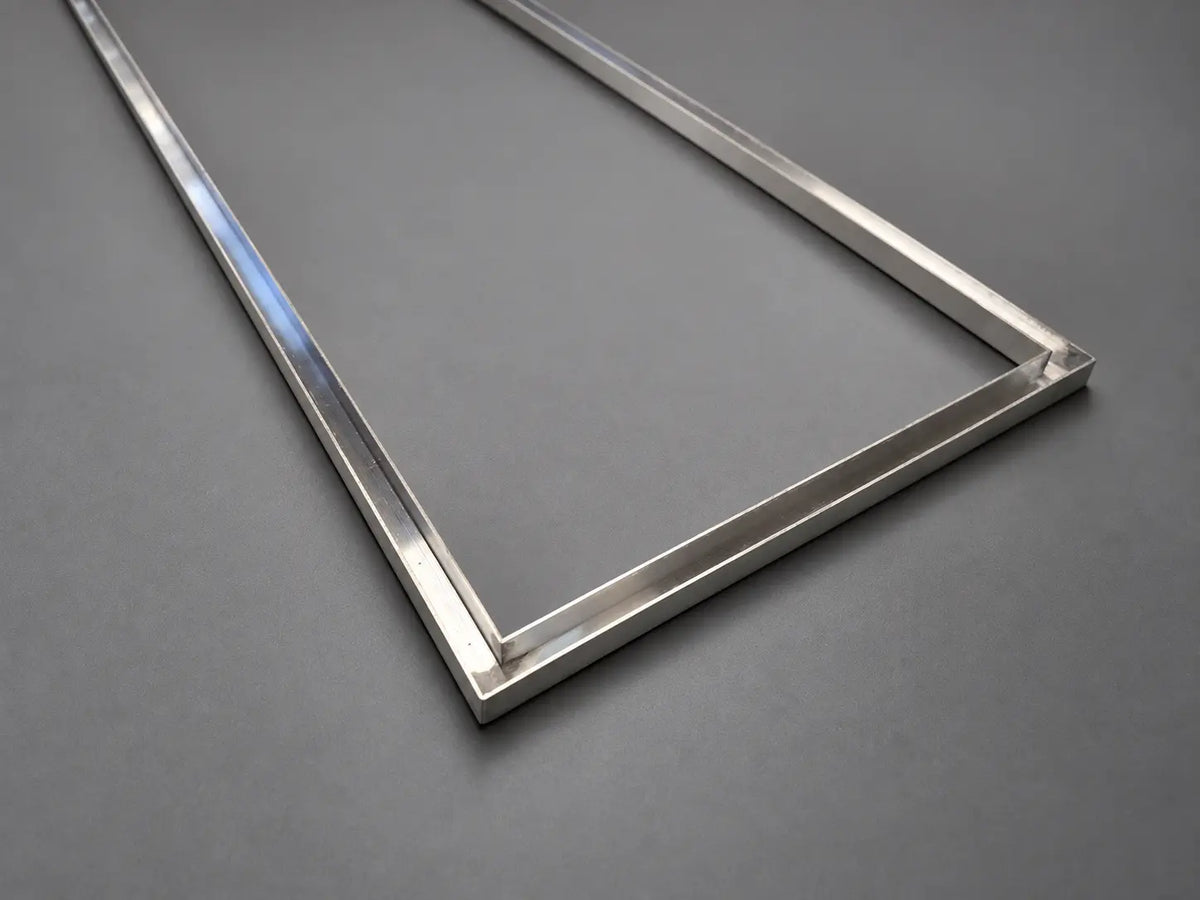
Raw aluminium arrives at the atelier looking more finished than it is. Laid across the bench, a fresh profile seems straight and clean. Turn it slowly under the workshop light and it shows faint ridges, small dents from handling, a dullness that shifts from one end to the other. None of it is visible from a step away. All of it would be visible later.
So no new lamp begins with the saw. Before anything is measured or cut, every profile is levelled and finished by hand. In a handmade aluminium lamp this is the stage nobody sees, and the one every later stage depends on.
Coarse first, then finer
Hand sanding starts with coarse grits. They do the heavy work, taking the high points down until the surface sits on one plane. Coarse paper leaves deep scratches of its own, so the next grit removes those, and the one after removes the marks of the second. I move step by step until the profile is level and reads the same along its whole length.
Skipping a step saves nothing. A fine grit used too early only polishes the ridges it was meant to cut through, and the unevenness stays underneath, harder to see.
A cut inherits the face it starts from
Only when the aluminium profiles are level and uniform does cutting begin, on a small circular saw with a 130 mm blade. A precise cut measured from an uneven face is precise only in relation to that face. When the pieces are later joined by brazing, with a flame rather than a TIG machine, any slight tilt between their surfaces becomes a step at the joint. Levelling the long profile before cutting gives every element the same starting plane, so neighbouring pieces agree before they ever meet.
What a matte finish keeps
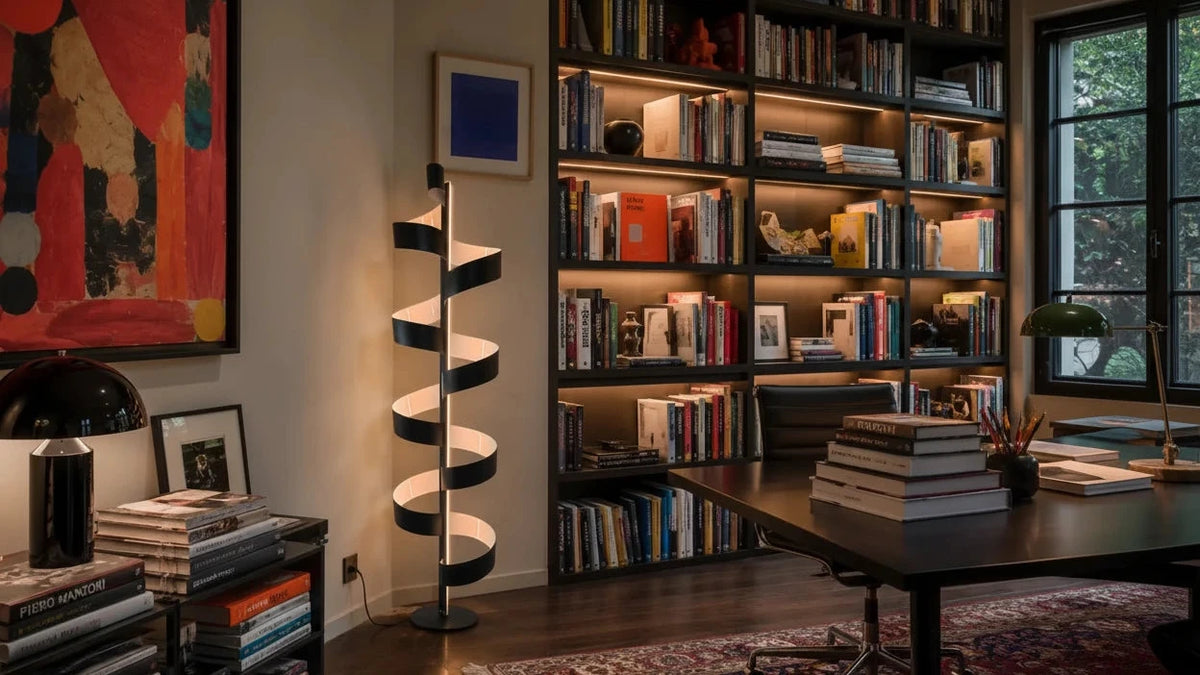
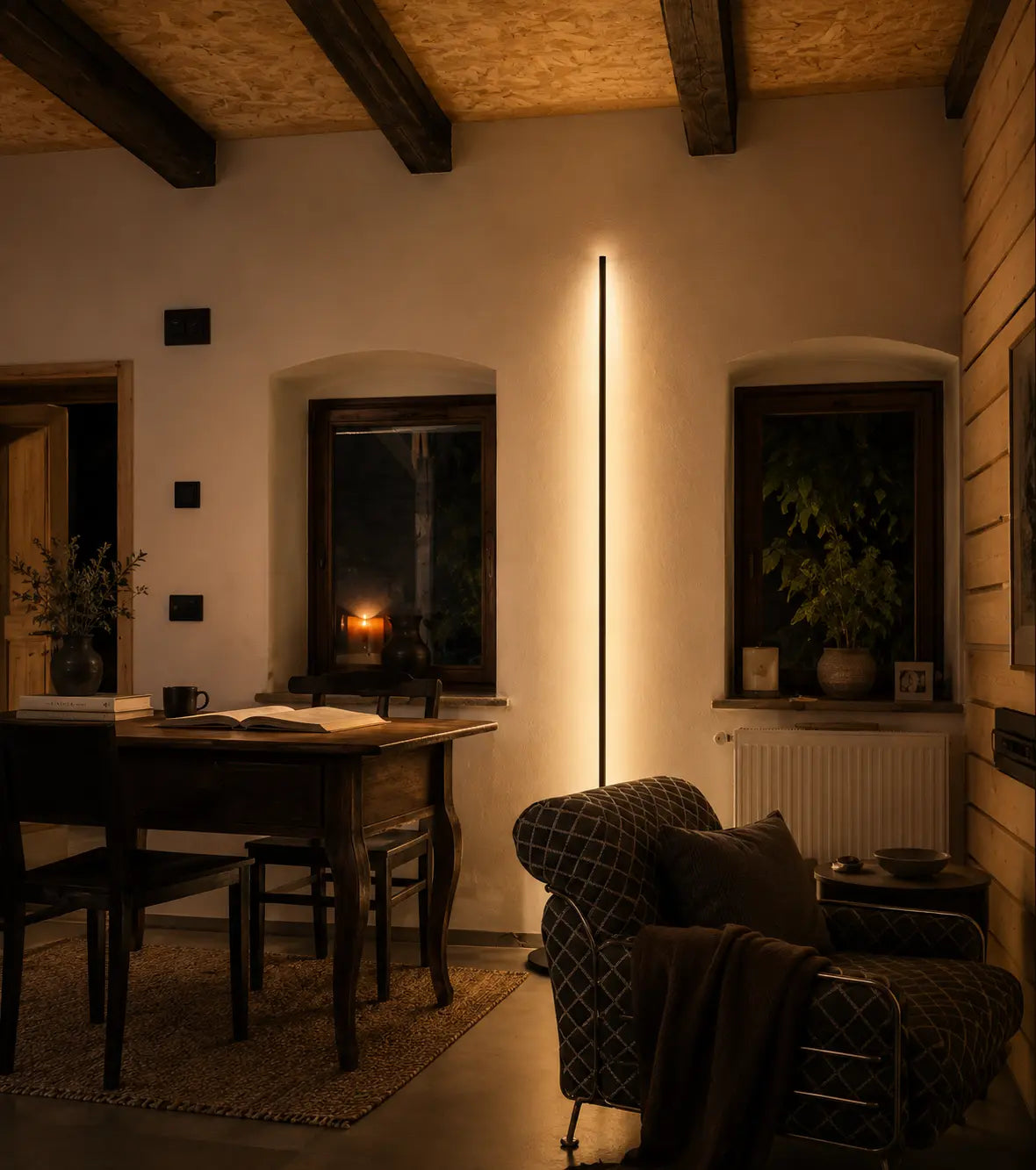
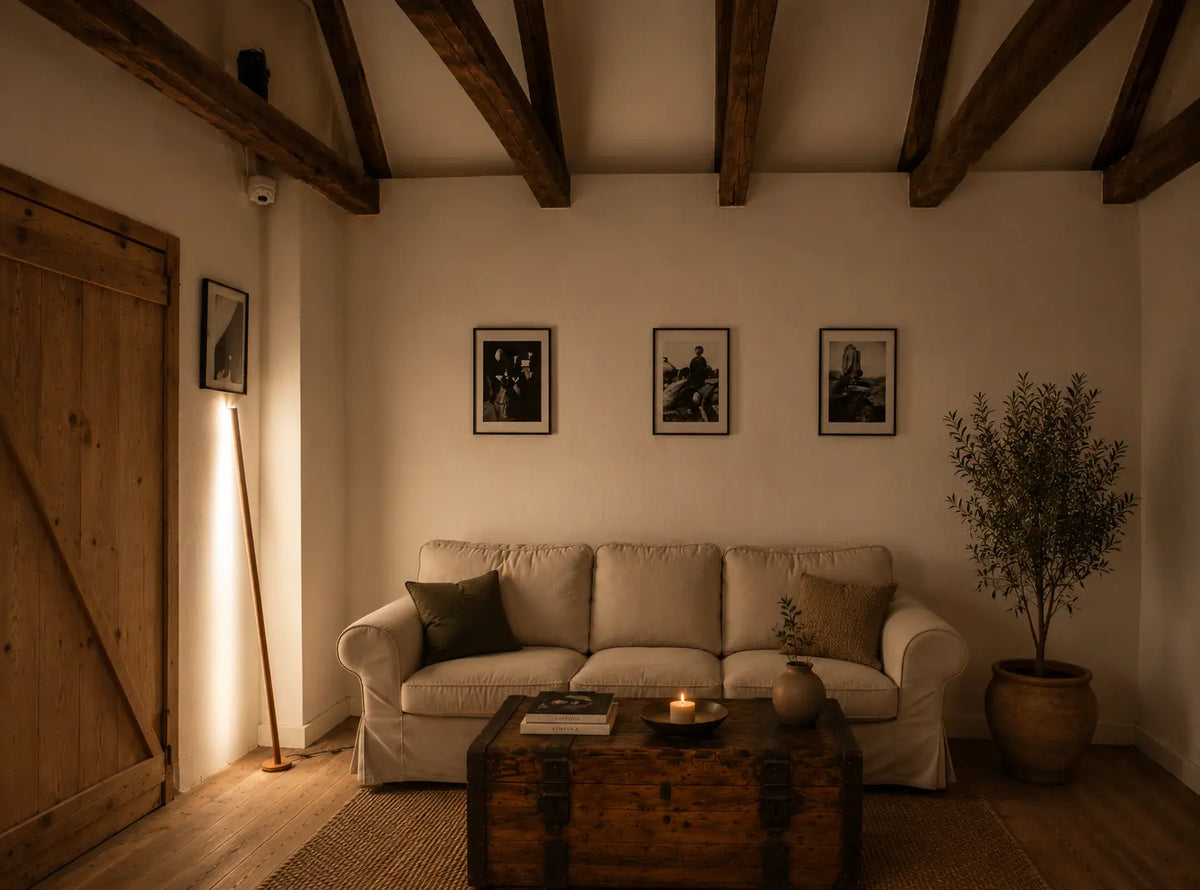
Every lamp ends with a matte finish with a sandblasted effect, laid over a special primer for aluminium. Matte does not conceal as much as people expect. Because it spreads light softly, a dip or a ridge reads as a change of tone along the profile. On a long piece such as the Gica Contra 195 cm — Sculptural Floor Lamp, whether finished in black, blue or olive green, an uneven band would be the first thing the eye found. It is one reason surface quality deserves attention when you choose the right sculptural floor lamp for your space.
Levelling is not the same as erasing the hand. Each piece is handmade in Europe, and small variations and subtle imperfections are not defects but the visible trace of the hand that made it. What sanding removes is different: the accidents the raw material carried in from outside the atelier. Much of contemporary light design looks to new technology; this part of the work stays at the bench.
The coarse grit may be the most decisive tool on the bench, yet nothing of it survives in the finished lamp. What remains is a plane true enough for light to travel along without catching, and it is hard to say where, in that sequence of disappearing scratches, the surface was actually made.