Bedroom Lighting After Sunset Begins by Leaving the Ceiling Dark
In many bedrooms the evening still depends on one switch by the door. It lights the room from above at morning strength, stays on through undressing and a few pages of reading, and ends with someone getting out of bed to turn it off.
The better rule is simple. After sunset, bedroom lighting should come from below the eye line of someone sitting in bed, and the ceiling should be allowed to go dark.
What an overhead light does after dark
A ceiling fitting brightens the largest surface in the room, the one facing a person lying down. Its light falls evenly on every wall, so the wardrobe front, the far corner and the bed share the same flat value. Nothing recedes, and the room keeps its full daytime height.
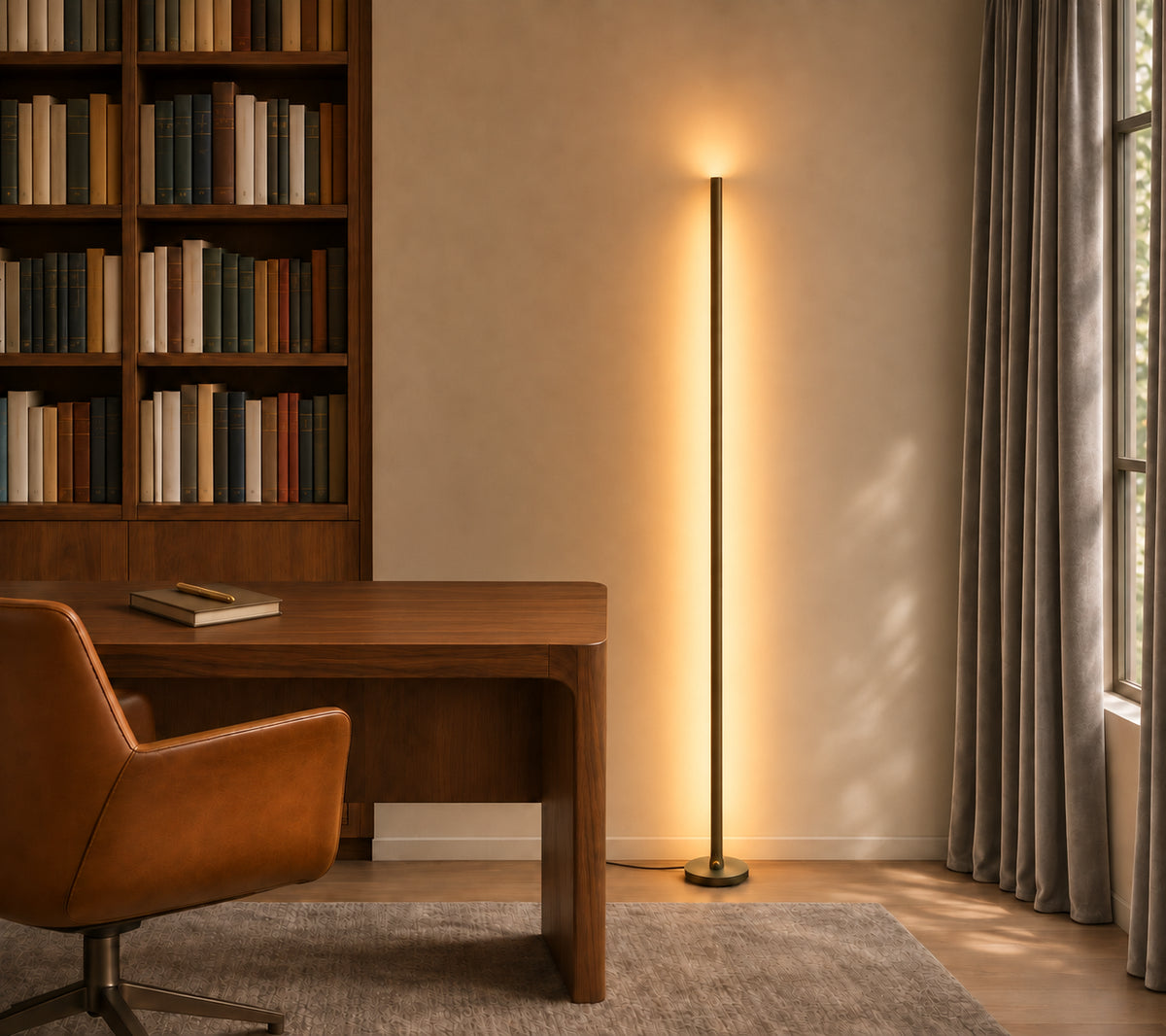
Switch it off and place a single source at mattress height, and the room changes shape. The wall beside the bed carries light while the upper half of the space falls away. The bedroom appears lower and closer, nearer to the scale of a body at rest. That is the real meaning of warm bedroom light: less a colour than a reduction of height.
Low, warm and adjustable
Each quality does separate work. Height keeps the source out of direct view once the head is on the pillow. Warmth makes walls and linen read softer than the cool white often chosen for kitchens and bathrooms.
Adjustment matters most and is most often forgotten. A dimmable lamp, or a dimmer on the bedside circuit, lets one source serve reading at ten and a last look at the clock near midnight, without a second switch.
Choosing the object seen last each night
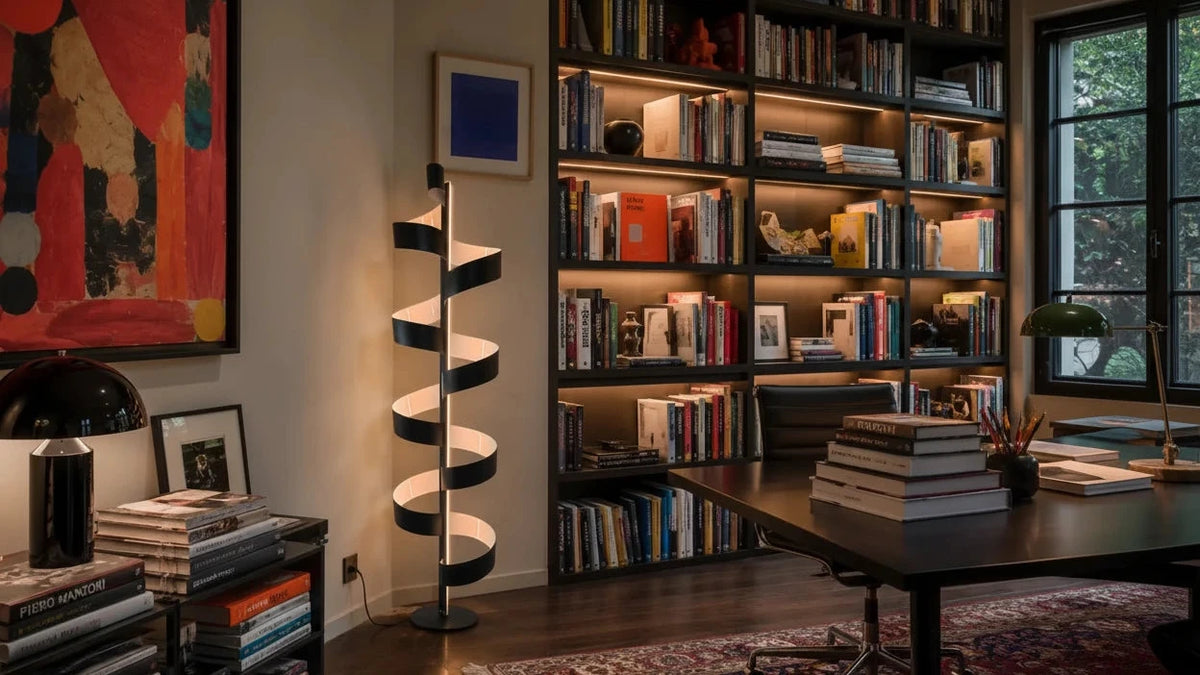
A bedside table lamp is seen at the very end of the day, at close range and usually from a reclining position. Its profile matters more than any shade, because it will be seen from the side, and its height should answer the headboard and the table, never the ceiling. The same attention to scale and silhouette guides choosing the right sculptural floor lamp for a larger space.
The Gica Contra table lamp shows why this view deserves attention. It is a sculptural object before it is a source of light: a vertical line, a circle and an illuminated triangle, drawn from an exclamation mark that Tommaso Cristofaro sketched after one of his son's determined answers of "No!". At 520 mm high, with light at 2700 K, it belongs at bedside height, and the story it carries is one of dialogue rather than conflict. The same reasoning about living with a piece over years appears in the journal's note on a floor lamp treated as a luminous sculpture in the home.
Placement follows from the pillow, not the doorway. Set the lit part slightly below the eyes of someone sitting against the headboard, and far enough back from the table edge that a hand reaching for a glass does not meet it.
If a bedroom still needs its ceiling light after dark, the fault lies in the height of its other sources, not in their number.